- AWH Editorial Team
- May 03, 2026
- South Asian Wedding Catering
Bangladeshi Wedding Food UK: Traditional...
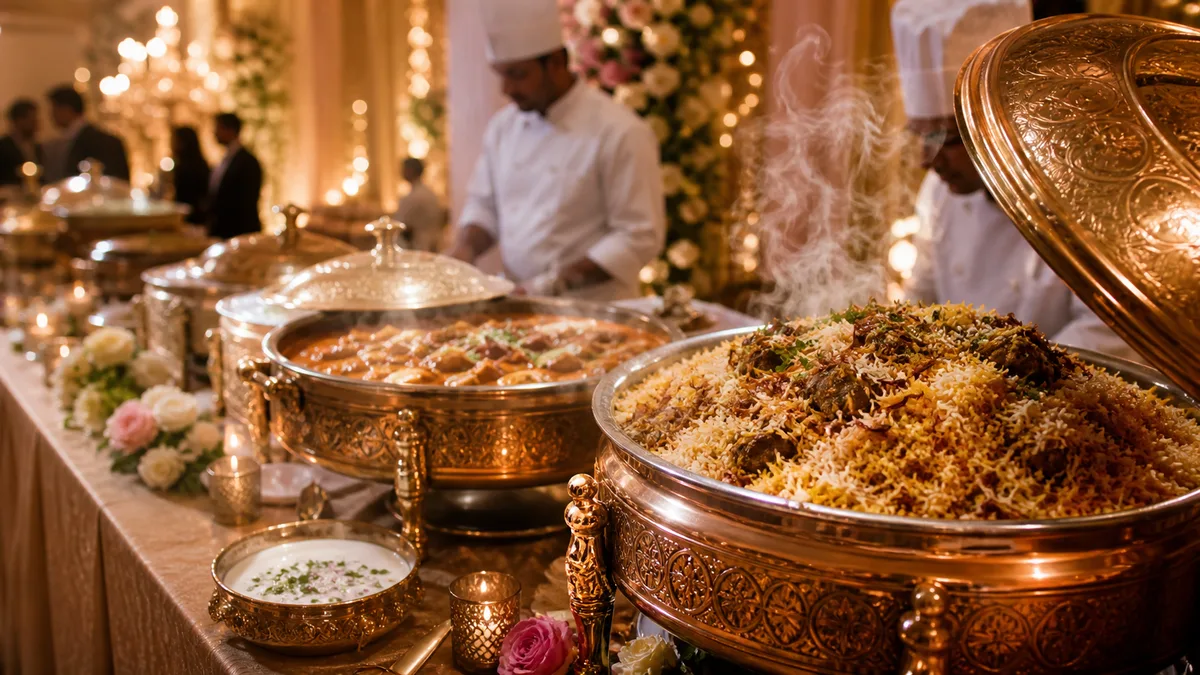
British Bangladeshi weddings — concentrated in Tower Hamlets, Newham, Luton, Birmingham, and Oldham — follow a rich culinary tradition rooted in the cooking of Sylhet, Chittagong, and Dhaka. The food is distinct from Pakistani and Indian wedding cooking in its use of whole spices, mustard oil, and specific regional techniques. This guide covers the traditional Bangladeshi wedding menu, catering logistics, and ideas for modern variations at UK events. Bangladeshi wedding polao (also written pulao) is the cornerstone of the meal. Unlike Pakistani biryani, Bangladeshi polao uses a lighter, more aromatic spice profile — cinnamon, cardamom, and bay leaf with fried onions. It is often cooked in ghee and served with a crown of fried onion and raisins. Beef or mutton polao (cooked with the meat stock) is the prestige version for large weddings. Bangladeshi "roast" (rosto) is a dry, whole-spice-coated chicken or beef dish, slow-cooked until the sauce reduces to a thick coating. Unlike British roast meat, it is a rich, heavily spiced preparation served in chunks. Chicken rosto and beef rosto are both standard wedding dishes. A Mughal-origin dish particularly associated with Dhaka celebrations — goat or lamb cooked in a white, yoghurt-based gravy with kewra water and whole spices. Rich, fragrant, and distinctive. A richer, darker curry — usually beef or mutton — cooked with a caramelised onion base and whole spices. Deeply flavoured and a wedding staple. Dry-fried (bhuna) meat in concentrated spices — more intense than a wet curry. Often served alongside polao. Masoor daal (red lentil) or mung daal, plus one or two vegetable bhaji (e.g. aloo bhaji, shim bhaji). These are lighter supporting dishes alongside the rich main courses. Freshly made naan or paratha. At many British Bangladeshi weddings, the bread comes from a local tandoor bakery supplied fresh on the day. In Bengali culture, sweets play a ceremonial as well as culinary role. Mishti is exchanged between families as a sign of celebration and goodwill. A dedicated mishti table or tray presentation is expected at formal weddings. Source mishti from a specialist Bengali sweet shop — mass-produced supermarket sweets are a poor substitute. British Bangladeshi weddings are typically alcohol-free: Large Bangladeshi weddings in East London and Birmingham can reach 400–600 guests. Key catering logistics: Both are festive rice dishes but they are distinct. Pakistani biryani is a layered dish with marinated meat and par-boiled rice, finished in the oven. Bangladeshi polao is an aromatic pilaf cooked together with the stock — lighter in colour, more delicate in spice, and often finished with fried onion and raisins. They are not interchangeable, and guests familiar with both will notice the difference. Specialist Bangladeshi wedding caterers are concentrated in Tower Hamlets and Newham in East London, and in Birmingham and Oldham. Community recommendations through local mosques or community centres are the most reliable method. Ask for a tasting before booking and confirm the caterer has cooked for weddings of your expected guest size.The Bangladeshi Wedding Dawat: Traditional Structure
The Rice Dish: Polao
Roast
Rezala
Kalia
Bhuna Gosht
Daal and Bhaji
Naan and Paratha
Bangladeshi Wedding Desserts
The Role of Mishti in Bangladeshi Weddings
Drinks
Catering Logistics for Large British Bangladeshi Weddings
What is the difference between Bangladeshi polao and Pakistani biryani?
Where can I find a Bangladeshi wedding caterer in the UK?
Share on