- AWH Editorial Team
- May 03, 2026
- Mehndi & Henna Guides
Indian Bridal Mehndi Designs: A Guide fo...
Indian and South Asian Bridal Mehndi Designs
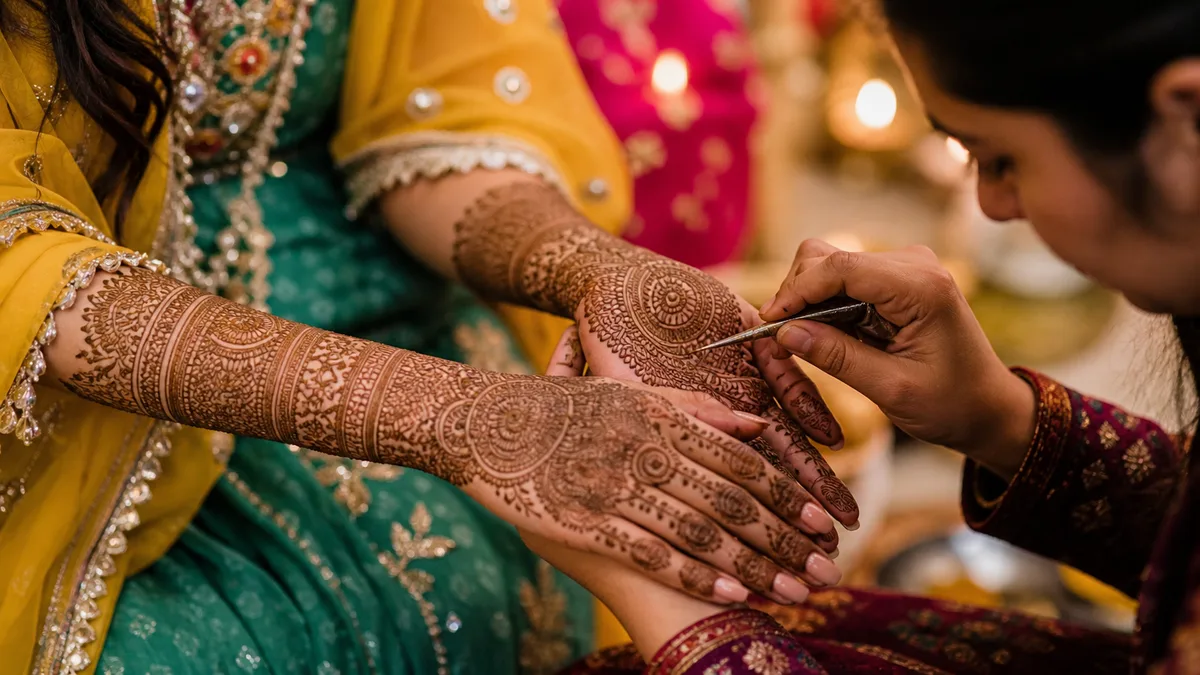
Bridal mehndi is one of the most significant pre-wedding rituals for South Asian brides — an art form with centuries of tradition that has evolved into a sophisticated and diverse practice. For UK brides, the choice of design style is a meaningful one: it reflects community heritage, personal aesthetic and the overall visual story of the wedding. This guide covers the main styles, motifs and considerations for choosing your bridal mehndi design.
Regional Styles of Indian Bridal Mehndi
Rajasthani Mehndi
Considered the most traditional and elaborate form of Indian bridal mehndi, Rajasthani mehndi features:
- Dense, full-hand coverage from fingertip to elbow — sometimes extending to the shoulder
- Bold paisleys (keri) as central motifs
- Floral patterns with petals and leaves filling every available space
- Peacock motifs — highly auspicious in Hindu tradition
- Human figures representing the bride and groom, sometimes hidden within the design for the groom to find on the wedding night
- Very fine, intricate filling patterns with minimal negative space
Rajasthani mehndi requires the most skilled application and takes the longest — typically 4–6 hours for a full bridal session.
Mughal Mehndi
Mughal mehndi draws on the artistic heritage of the Mughal court, featuring large floral designs, rose patterns, and flowing vines. It uses slightly more negative space than Rajasthani mehndi and the overall character is more delicate and refined. Mughal mehndi is popular for brides who want traditional coverage without the maximum density of Rajasthani designs.
Pakistani Bridal Mehndi
Pakistani bridal mehndi combines elements of Rajasthani and Mughal styles with distinctive characteristics:
- Dense full-hand coverage typically extending past the elbow
- Mehndi extending up the arm — sometimes to the shoulder on one or both arms
- Bold central motifs (flowers, paisleys) surrounded by dense filler patterns
- Thick outline work with fine interior detailing
- Legs treated extensively — some Pakistani bridal mehndi covers both legs to the knee
Gujarati and Maharashtrian Mehndi
Gujarati mehndi tends to feature larger, bolder motifs with more open space between elements than Rajasthani designs. Typical motifs include geometric patterns, large lotus flowers and mango (keri) shapes. This style suits brides who want recognisably traditional mehndi with a slightly less dense overall look.
Key Motifs in Indian Bridal Mehndi
- Paisley / Keri: The most fundamental mehndi motif — a teardrop shape that symbolises fertility and prosperity
- Lotus: Spiritual significance in Hindu and Buddhist traditions; symbolises purity and new beginnings
- Peacock: A sacred bird in Hindu tradition; associated with love, beauty and royalty
- Elephant: Symbol of wisdom, strength and good fortune
- Bride and groom figures: Hidden within the design — a playful tradition where the groom searches for his image in the bride's mehndi
- Floral patterns: Roses, jasmine, marigolds — endlessly varied across regional styles
- Geometric patterns: Diamonds, triangles and lattice work as filler patterns
Full-Hand vs. Half-Hand Coverage
Coverage levels vary by tradition and personal preference:
- Full bridal mehndi: Both hands from fingertip to elbow, plus both feet to the ankle or mid-calf — standard for traditional Indian and Pakistani bridal mehndi
- Half-hand: Fingertip to wrist — a more minimal option for brides who want mehndi without full arm coverage; popular for modern or fusion aesthetic weddings
- Feet only or hands only: Some brides choose one over the other; feet-only is rare for Indian bridal mehndi as hands are considered essential
- Extended arm: Full coverage past the elbow and up the arm — typical for Pakistani bridal mehndi, where arm coverage is often more extensive than in North Indian traditions
Choosing Your Design: Practical Considerations
- Choose a style and coverage level consistent with your community's expectations and your personal comfort level
- Consider your outfit colours — very dense dark mehndi against a red or maroon lengha photographs differently to lighter mehndi against a pale outfit
- Consider your jewellery — very heavy bangles or cuffs may cover significant portions of the mehndi; plan the jewellery placement in relation to the design
- Agree the final design at the trial session, not on the wedding day
Frequently Asked Questions
What is the most traditional Indian bridal mehndi style?
Rajasthani mehndi is considered the most traditional and elaborate form of Indian bridal mehndi, featuring dense full-hand coverage from fingertip to elbow with intricate paisleys, peacocks, lotus flowers and human figures. It requires the most skilled application and the longest session time.
Should a bride's name or the groom's name be hidden in the mehndi?
This is a popular South Asian tradition — the groom's name (or initials) is hidden within the intricate patterns of the bridal mehndi, and the groom must find it on the wedding night. Whether to include it is a personal choice. If you want it included, tell your artist explicitly; it does not happen automatically.
How far up the arm does bridal mehndi typically go?
In most Indian traditions, bridal mehndi extends from the fingertips to the elbow on both hands. In Pakistani traditions, it often extends past the elbow and up the arm — sometimes to the shoulder on one or both arms. The coverage level is a design decision to agree with your artist at the trial stage.
Does bridal mehndi include the feet?
Yes, for most traditional Indian and Pakistani bridal mehndi. Full bridal mehndi typically includes both hands (to the elbow) and both feet (to the ankle or above). The feet designs often mirror or complement the hand designs in motif and style.
What is the peacock motif in mehndi?
The peacock is one of the most beloved and widely used motifs in Indian bridal mehndi. In Hindu tradition, the peacock is a sacred bird associated with love, beauty and royalty. Peacock designs — ranging from a single large peacock as the central motif to smaller peacocks interspersed within floral patterns — appear in virtually all regional styles of Indian mehndi.
Share on