- AWH Editorial Team
- May 03, 2026
- Mehndi & Henna Guides
How to Plan a Mehndi Night for a South A...
What Is a Mehndi Night?
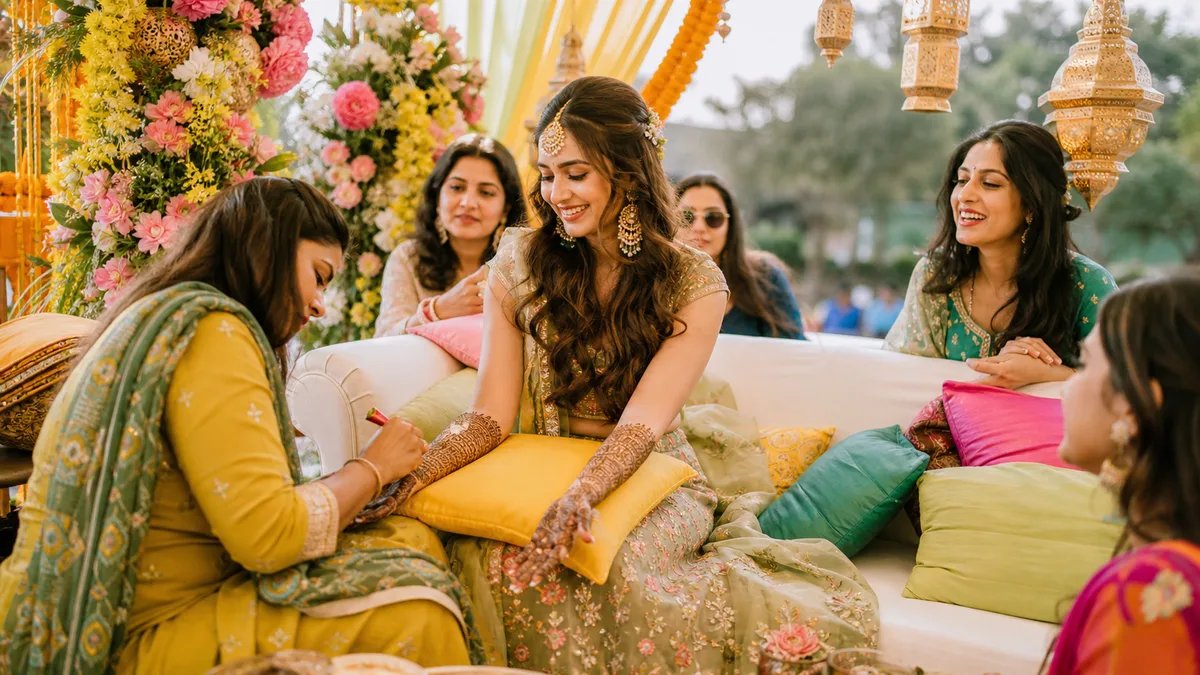
The mehndi night (also called a mehndi party, dholki, sangeet or — in Bangladeshi traditions — gaye holud) is a pre-wedding celebration centred on the application of henna (mehndi) to the bride. Held one to three days before the wedding, it is traditionally a women-led event attended by female family members and close friends, though many UK families now invite both men and women.
The event combines the ceremonial application of the bridal mehndi with music, dancing, singing, food and general celebration. It is typically the most informal and intimate of the wedding events — smaller in scale than the main reception, and characterised by warmth and spontaneity rather than formal ceremony.
Step 1: Decide on Venue
The mehndi night can be held at:
The Family Home
The most traditional option, and still common for smaller, intimate mehndi nights. The living room, garden or a combination of both can be transformed with decoration. The advantage is low cost and a genuinely personal atmosphere. The limitation is space — a home mehndi works well for up to 50–80 guests; beyond that it becomes crowded.
A Hired Hall or Function Space
For larger guest lists (80–300+), a hired venue provides more space, kitchen facilities, parking and flexibility in decoration. Some families hire the same venue for both the mehndi and the main reception on consecutive days, which simplifies logistics and often attracts a discount.
A Restaurant or Banqueting Suite with a Private Room
A private dining room at a restaurant is a popular choice for smaller mehndi nights — catering is handled by the venue, and the space provides an intimate setting without the cost of a full hall hire.
Step 2: Book the Mehndi Artist(s)
The mehndi artist is the most important booking for the event. You need:
- A bridal mehndi session — the bride's full application (both hands to the elbow, feet) is a long session (3–5 hours) that should ideally be done in a comfortable, quiet space before the main party begins
- Guest mehndi service — one or more additional artists to apply simpler designs to guests during the party; calculate one artist per 20–30 guests per hour for reasonable coverage
Book your bridal mehndi artist 9–12 months in advance for peak wedding season. Confirm they use natural henna only — never black henna, which contains PPD and can cause severe allergic reactions and permanent scarring.
Step 3: Plan the Entertainment
Entertainment at a mehndi night typically includes:
- Dhol player — the dhol creates the energetic, celebratory atmosphere of the mehndi; book one for the arrival of the bride and for the dancing portions of the event
- Bollywood or bhangra DJ — keeps energy high throughout the evening
- Dholki singing — in Punjabi and Pakistani traditions, female relatives sing traditional wedding songs (dholki songs) while playing the dholki drum; this is a beautiful, intimate element of the celebration
- Live musicians — a live qawwali performance or classical music is popular at more formal mehndi nights
- Games and activities — traditional games involving the bride and groom (guessing the initials hidden in the mehndi design, ring in the rice, etc.) add interactive entertainment
Step 4: Organise Catering
Mehndi night food is typically lighter and more informal than the main reception. Popular options include:
- Evening snacks and starters — samosas, spring rolls, chaat, finger food
- A buffet-style dinner — biryani, curries, daal, breads
- Mithai table — a selection of Indian and Pakistani sweets (barfi, gulab jamun, ladoo)
- Refreshments — chai, sharbat, juices, mocktails
For home mehndi nights, catering can be handled by family (a traditional and communal approach) or by a hired caterer. For venue-based events, confirm whether in-house catering is available or whether you need to arrange your own.
Step 5: Decorate the Space
Mehndi night decoration typically uses a warmer, more vibrant palette than the main reception — yellows, oranges, hot pinks, jewel tones — evoking the turmeric and henna colours associated with the celebration. Common elements include:
- Flower garland backdrops (marigold, rose, carnation)
- Hanging flowers and lanterns
- A decorated seating area for the bride
- String lights and fairy lights
- Traditional fabric draping (dupatta or sari fabric in bright colours)
- Diyas (oil lamps) or candles for the evening atmosphere
Typical Mehndi Night Timeline
- Afternoon (3–5pm): Bride's mehndi session begins — ideally in a quiet space before guests arrive
- Evening (6–7pm): Guests arrive; guest mehndi applications begin; dholki or DJ starts
- Evening (7–8pm): Food service; traditional songs and games
- Evening (8–10pm): Dancing, dhol, continued mehndi for guests
- Late evening (10pm+): Mithai and refreshments; informal close
Frequently Asked Questions
How many days before the wedding should the mehndi night be held?
One to three days before the wedding is standard. The mehndi should be applied early enough for the stain to fully develop (which takes 24–48 hours to reach its darkest colour), but not so early that it has begun to fade significantly by the wedding day. Two days before the wedding is the most common timing.
Should men attend a mehndi night?
Traditionally the mehndi night was a women-only event. Many UK South Asian families now invite both men and women. The decision depends on family tradition and preference. Some families hold a combined mehndi and dholki event for all guests, and some keep it female-only for the mehndi application and open it up to mixed guests later in the evening.
How much space do you need for a mehndi night?
A home mehndi night works well for up to 50–80 guests, depending on the size of the house and garden. For 100+ guests, a hired hall or function room is more practical. The mehndi artist also needs a dedicated workspace with good lighting and a flat surface — plan this separately from the main seating area.
What is the difference between a mehndi night and a dholki?
The terms overlap significantly in UK South Asian usage. A dholki (named after the two-headed drum used for singing) typically refers to informal pre-wedding gatherings where traditional songs are sung, and may or may not include mehndi application. A mehndi night specifically centres on the mehndi application ceremony. In practice, many UK families use the terms interchangeably for the same pre-wedding celebration.
Is a mehndi night the same as a gaye holud?
No. The gaye holud is a distinct Bangladeshi pre-wedding ceremony involving the application of turmeric paste (holud) to the bride and groom for purification and blessing. It has its own specific rituals separate from the mehndi application. Some families hold both — a gaye holud on one day and a separate mehndi event on another.
Share on