- AWH Editorial Team
- May 03, 2026
- Cultural Wedding Planning
How to Plan a Pakistani Wedding in the U...
Pakistani weddings in the UK are multi-day celebrations that blend Islamic religious tradition with rich South Asian cultural heritage. They involve the entire extended family and community, and planning one requires coordinating multiple ceremonies, suppliers, and logistics across several days.
This guide covers the full structure of a Pakistani wedding, what each ceremony involves, how to approach civil registration, and the key planning decisions you will face.
The Multi-Day Structure of a Pakistani Wedding
Dholki
The Dholki (named after the drum that is played) is an informal pre-wedding gathering, typically held in the week leading up to the wedding. Women from both families sing traditional wedding songs (mehndi songs or dholki songs), play the dholki drum, and celebrate together. It is usually a more intimate, home-based event.
Mehndi / Mayoun
The Mehndi night is a dedicated celebration for the application of henna to the bride's hands and feet by a mehndi artist. It is accompanied by music, dancing, and food. The Mayoun is a related ceremony in which the bride is secluded and rubbed with a paste of turmeric and gram flour (ubtan) to brighten the skin before the wedding. These are often held as the same event or on consecutive days.
Baraat
The Baraat is the groom's procession to the wedding venue or bride's family home. It involves the groom arriving on horseback (or in a decorated car) accompanied by his family and friends to music, dancing, and celebration. The bride's family receives the Baraat at the venue with the Milni — a formal meeting and garland exchange between male relatives of both families.
Nikah
The Nikah is the Islamic marriage contract, conducted by an Imam. The groom and bride (through her wali, or male guardian) each consent to the marriage, the Mehr (dower) is agreed, and witnesses sign the Nikah Nama (marriage document). A Khutbah (sermon) is delivered, followed by prayers. The Nikah may take place at the wedding venue, at a mosque, or at the bride's family home.
Valima
The Valima is the wedding reception hosted by the groom's family, traditionally on the day after the Nikah or within three days. It is the formal celebration and announcement of the marriage to the community. The Valima can be a large event comparable to the main wedding reception, or a more intimate gathering depending on family tradition.
Civil Marriage Registration
If the Nikah takes place at a mosque registered for civil marriages in England and Wales, the couple will sign the civil register at the same time as the Nikah — this makes them legally married in one step. If the mosque is not registered, the Nikah is a religious ceremony only. Couples must give notice of marriage at their local register office (at least 28 days before) and attend a civil ceremony separately. This is a common arrangement for Pakistani couples in the UK — plan for it from the start.
Choosing Venues for a Pakistani Wedding
Pakistani weddings require venues with Halal-certified catering — either in-house or via an approved external caterer. Large banqueting halls in Bradford, Birmingham, Manchester, and East London are well-experienced with Pakistani weddings and often the most practical choice for high guest numbers. For the Nikah, your mosque or a venue with a dedicated ceremony space is appropriate.
Catering for a Pakistani Wedding
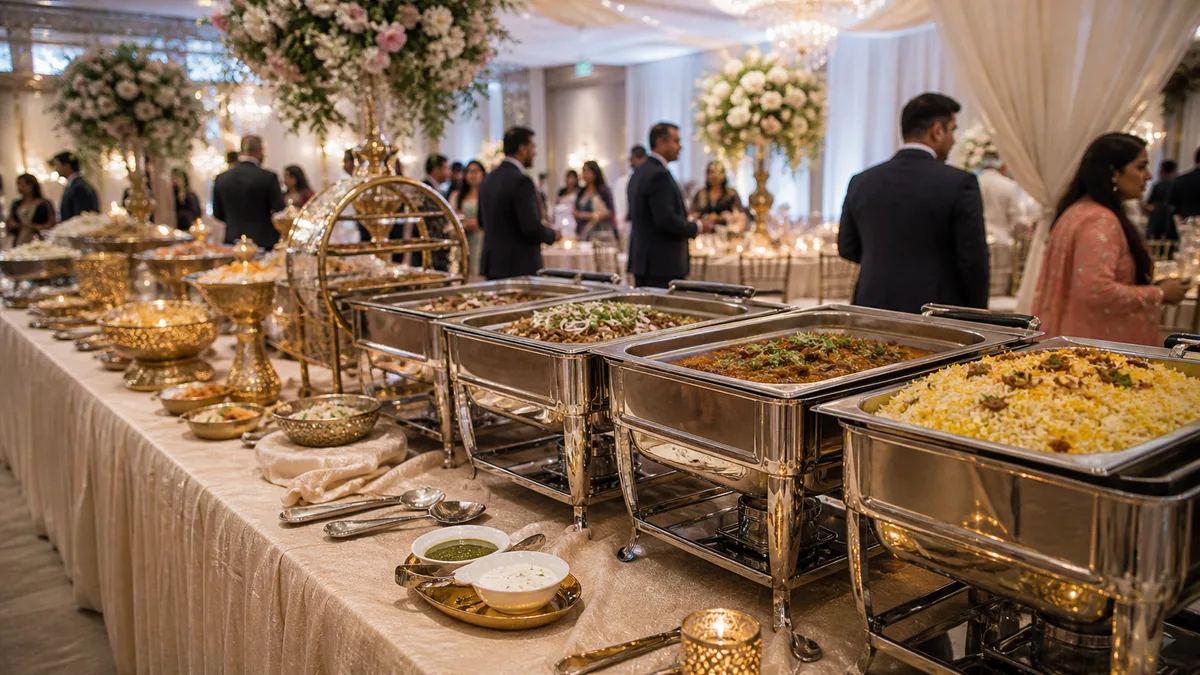
Pakistani wedding menus typically feature a range of South Asian dishes — biryani, mutton karahi, nihari, kebabs, rice dishes, and desserts including gulab jamun and barfi. All catering must be Halal-certified. Caterers specialising in Pakistani or North Indian cuisine are available in all major South Asian cities in the UK.
Key Suppliers for a Pakistani Wedding
- South Asian wedding photographer and videographer experienced with multi-day Pakistani weddings
- Mehndi artist (book early — in-demand artists fill their calendars months ahead)
- DJ or live entertainment for Mehndi and Valima
- Dhol players for the Baraat procession
- Bridal hair and makeup artist
- Stage/décor team for nikah setup and Reception
Frequently Asked Questions
Is a Nikah legally recognised in the UK?
A Nikah is legally recognised only if it is conducted at a mosque registered for civil marriages. If not, it is a religious ceremony only. Couples must complete a separate civil ceremony at a register office to be legally married. Check GOV.UK and your local register office for current guidance.
How many days does a Pakistani wedding last?
A full traditional Pakistani wedding spans three to five days: Dholki, Mehndi/Mayoun, Baraat, Nikah, and Valima. Smaller families may combine events or simplify the programme.
What is a Mehr in a Pakistani wedding?
The Mehr (or Mahr) is the obligatory gift or financial settlement that the groom gives to the bride as part of the Nikah contract. It is agreed between the families before the Nikah and specified in the Nikah Nama. It is the bride's right and her property.
Can a Pakistani wedding be held at a non-mosque venue?
Yes. The Nikah can be conducted at any venue by a qualified Imam, including a wedding hall, hotel, or private home. However, for it to be legally recognised, the venue must be registered for civil marriages or you must hold a separate civil ceremony.
What is the typical guest list size for a Pakistani wedding in the UK?
Pakistani weddings in the UK often host 300 to 600 guests or more, particularly for the main Nikah and Valima events. The Dholki and Mehndi may be smaller, more intimate gatherings.
How early should I book suppliers for a Pakistani wedding?
For peak summer dates, book your venue 12 to 18 months ahead, photographer immediately after, then caterer, décor, and entertainment. Mehndi artists in particular can fill their calendars 6 to 12 months in advance.
Share on