- AWH Editorial Team
- May 03, 2026
- Cultural Wedding Planning
How to Plan a Punjabi Wedding in the UK:...
The Punjabi wedding is one of the most celebrated and recognisable wedding traditions in the UK. Marked by colour, music, dancing, and genuine warmth, it spans two to four days and involves the entire family and community in a way few celebrations anywhere can match.
Punjabi heritage in the UK is predominantly Sikh and Hindu, and while the religious ceremonies differ, the cultural programme — the Baraat, the bhangra, the Mehndi night, the elaborate décor — is largely shared. This guide covers both traditions.
The Multi-Day Punjabi Wedding Programme
Sagan / Roka
The formal engagement blessing — a small family gathering at which the groom's family visits the bride's family to confirm the match, exchange gifts, and receive blessings. Often the starting point for wedding planning.
Chunni Chadai
The groom's family presents the bride with a chunni (dupatta — head scarf) in a ceremony marking her formal acceptance into the groom's family. Gifts are exchanged between families.
Maiyan / Vatna
A turmeric and gram flour paste (vatna or ubtan) is applied to both the bride and groom at their family homes in the days before the wedding. A purification and beautification ritual, typically an intimate family ceremony.
Mehndi Night
An evening celebration centred on the application of henna to the bride by a professional mehndi artist. Female relatives and friends are also decorated. Music, dancing, and a festive atmosphere — one of the most joyful pre-wedding events.
Chooda Ceremony (Sikh)
The bride's maternal uncle presents her with a set of red and white bangles (chooda) which she traditionally wears for 40 days after the wedding. The bangles are first soaked in milk and rose petals. This ceremony is often held on the morning of the wedding day.
Baraat
The groom's wedding procession arriving at the venue — the most exuberant event of a Punjabi wedding. The groom arrives on horseback (or in a decorated car) accompanied by family and friends dancing to live dhol. The Milni ceremony follows, with formal garland exchanges between male relatives of both families.
Main Ceremony
Sikh: The Anand Karaj at the Gurdwara — four Lavaan (circumambulations of the Guru Granth Sahib) conducted by the Granthi. Hindu Punjabi: The Saptapadi — seven sacred steps around the sacred fire conducted by a Pandit. Both ceremonies last one to two hours and are spiritually central to the day.
Doli
The bride's emotional departure from her family home, accompanied by her family's tears, blessings, and traditional songs. One of the most moving moments of the entire celebration.
Reception
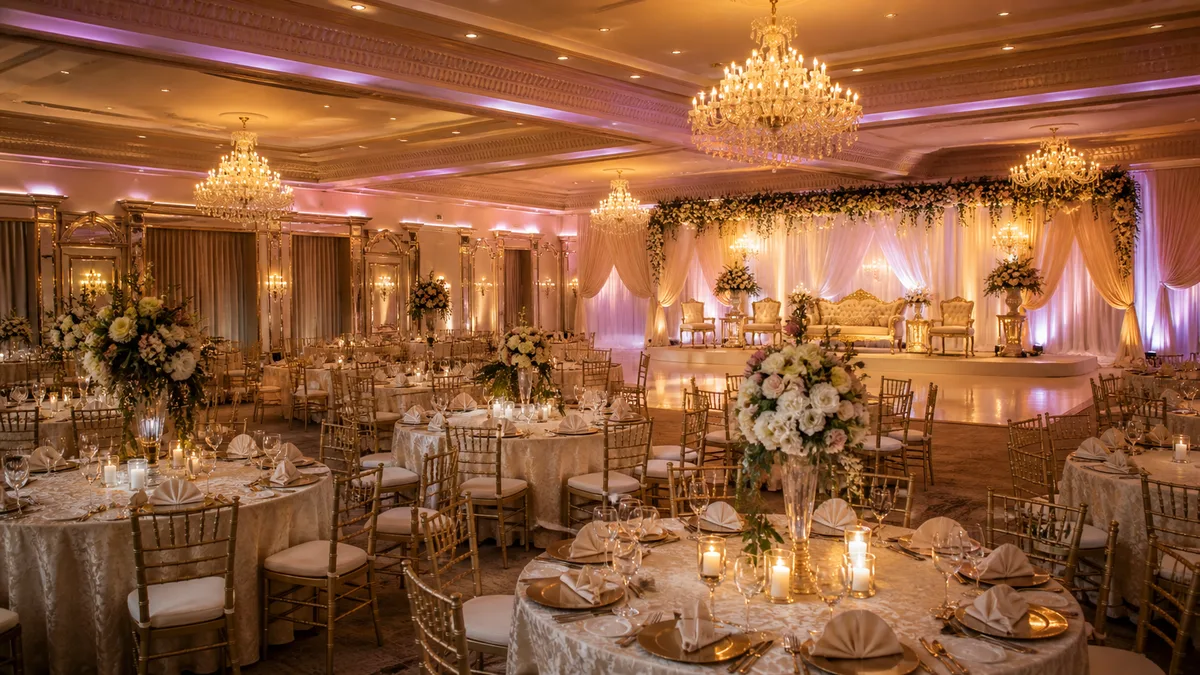
The evening celebration for the full guest list — a sit-down meal, speeches, DJ, bhangra and Giddha dancing, and entertainment. Often the most spectacular event of the whole wedding.
Bhangra and Giddha: The Punjabi Wedding Dance Traditions
Bhangra is the traditional folk dance of Punjab — an exuberant, energetic celebration performed by men. Giddha is the female equivalent — equally vibrant, with clapping, singing, and boli (folk verses). At Punjabi weddings, family members traditionally perform bhangra and Giddha at the Reception and Mehndi night. Many families also hire professional bhangra troupes to lead the dancing.
The Dhol Player
A live dhol player is essential for the Baraat procession — the driving beat of the dhol is the soundtrack to the groom's arrival. Many couples also use the dhol player to lead bhangra dances at the Reception. Book a dhol player alongside your DJ, well in advance of peak summer dates.
Venue Requirements for a Punjabi Wedding
Punjabi weddings typically host 300 to 600 guests. Venues must have sufficient capacity for both the ceremony and a full sit-down meal, with space for dancing. For Sikh weddings, the Gurdwara accommodates the Anand Karaj; the Reception is held at a separate banqueting hall. For Hindu Punjabi weddings, a venue that permits an open flame is required for the Saptapadi. In both cases, West London (Southall, Wembley, Harrow), Birmingham, and Leeds have well-established Punjabi wedding venue markets.
Catering for a Punjabi Wedding
Punjabi cuisine is rich and generous — hearty curries, dal makhani, saag, biryani, tandoori dishes, and fresh bread. For Sikh weddings, Langar (the Gurdwara's community meal) is served at the ceremony venue; the Reception typically features a full Punjabi menu. For Muslim Punjabi families, all catering must be Halal-certified.
Frequently Asked Questions
What is the difference between a Sikh and Hindu Punjabi wedding?
The central religious ceremony differs: Sikh weddings centre on the Anand Karaj at a Gurdwara; Hindu Punjabi weddings centre on the Saptapadi conducted by a Pandit. Many cultural traditions — the Baraat, Maiyan, Mehndi, Doli, bhangra at the Reception — are shared across both.
Is a Punjabi wedding legally recognised in the UK?
Only if the religious ceremony takes place at a registered venue with a civil registrar present. For Sikh weddings at unregistered Gurdwaras, and Hindu Punjabi ceremonies at unregistered venues, a separate civil ceremony at a register office is required. Always verify with your Gurdwara or venue and consult GOV.UK.
How long does a Punjabi wedding last?
Typically two to four days, encompassing the Maiyan, Mehndi night, Chooda (for Sikh), Baraat, main ceremony, Doli, and Reception. The full programme depends on the family's tradition and how many ceremonies they choose to celebrate separately.
Is bhangra performed at all Punjabi weddings?
Bhangra is strongly associated with Punjabi weddings but is not obligatory — it is a cultural tradition rather than a religious requirement. Most Punjabi families celebrate with some form of bhangra at the Reception, whether led by family members or a professional troupe.
What do I need for a traditional Baraat procession in the UK?
A live dhol player is the centrepiece of the Baraat. A decorated horse or horse and carriage is traditional, though many grooms now arrive in decorated cars. The procession involves the groom's family and friends dancing to the dhol as they approach the venue. Confirm with your venue that a Baraat procession is permitted outside.
Share on