- AWH Editorial Team
- May 03, 2026
- South Asian Wedding Catering
South Asian Wedding Buffet Ideas: How to...
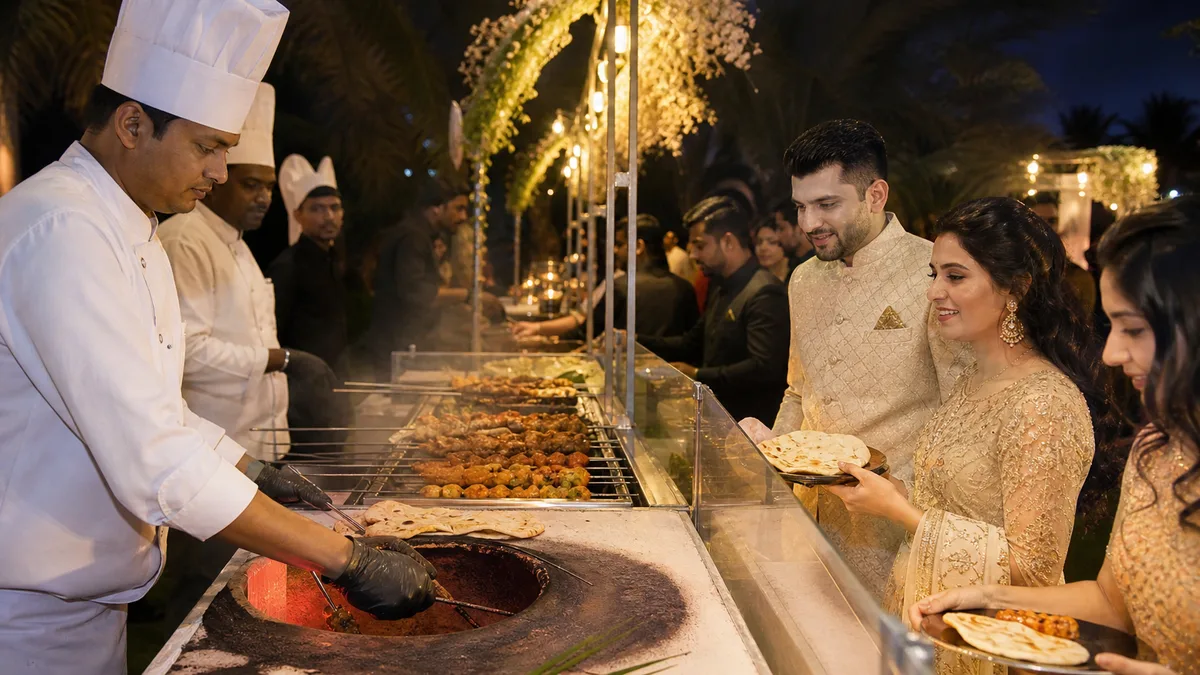
The South Asian wedding buffet has evolved. Where once a large chafing dish setup of curries and rice was standard, modern British Asian weddings increasingly combine traditional dishes with live cooking stations, street food corners, and Instagram-ready dessert tables. This guide covers creative buffet ideas — from the arrival through to dessert — for South Asian weddings in the UK. The best first impression is immediate, fragrant, and interactive. As guests arrive, offer: A dedicated chaat chef assembling pani puri, papdi chaat, or dahi puri to order. Theatrical, interactive, and uniquely South Asian. Very popular as a reception activity while the main space is set for dinner. Fresh pakoras cooked to order — spinach, potato, cauliflower, and chilli — served hot with chutneys. The aroma alone welcomes guests into the space. A chef cooking chicken or lamb karahi to order in large iron woks over a high flame. Dramatic, fragrant, and unmistakably South Asian. Guests queue to watch and receive a fresh portion. The single most popular live cooking station at British Asian weddings. A clay tandoor oven on site with a bread-maker producing fresh naan and roti throughout the meal. Fresh bread transforms the buffet experience compared to pre-baked options kept warm in foil. An outdoor or indoor charcoal grill producing seekh kebab, chicken boti, and tandoori chicken throughout the evening. The char and smoke aroma creates an instant atmosphere. Some caterers prepare biryani in sealed dum vessels (sealed with dough) and open them at the table in front of guests — releasing a cloud of fragrant steam. A theatrical and memorable moment that photographs beautifully. For 200–400 guests, a well-planned main buffet needs: The dessert table is increasingly a styled centrepiece at South Asian weddings — decorated to match the wedding colours and filled with a curated selection: A dedicated drinks station prevents guests from crowding a single service point: Communicate your headcount to the caterer accurately and build in a 5–10% buffer above your confirmed number. Agree with your caterer on what constitutes "running out" and what their protocol is — replenishment from a reserve batch is standard practice. For live stations, ensure the chef has enough ingredients for the full service period, not just the expected peak. For most South Asian weddings, yes. Live stations — particularly a karahi or BBQ grill — create a focal point, produce fresher food, and generate a sensory experience (aroma, theatre) that a static buffet cannot match. They typically add £5–£15 per head to the catering cost but disproportionately improve the guest experience.The Arrival: Street Food and Canapé Reception
Classic Arrival Snacks
Live Chaat Station
Pakora Bar
Live Cooking Stations for the Main Course
Live Karahi Station
Tandoor Station
Live BBQ Grill
Biryani Dum Opening Ceremony
Main Buffet Layout
Dessert Table Ideas
Drinks Station
How do I prevent food running out at a large South Asian wedding buffet?
Are live cooking stations worth the extra cost?
Share on